Last week I finished my entry for the Historical Sew Fortnightly #5 - I'm falling further and further behind! Whoops. I'm taking off for the next couple challenges, maybe I'll catch up then. Or not. ;) Either way, I'm still glad to be part of this group because it's helping me focus on certain projects that have been in the works for way too long!
This entry is inspired by the 1930's Dust Bowl, which seemed to be a popular theme for this task. I've been wanting some vintage-y jeans for a long time and did the pattern work for these last summer, and I plan on living in them until they're in tatters (which will make them even more "authentic" ;). For this outfit, I paired them with a feedstack print top for a good 30's look.
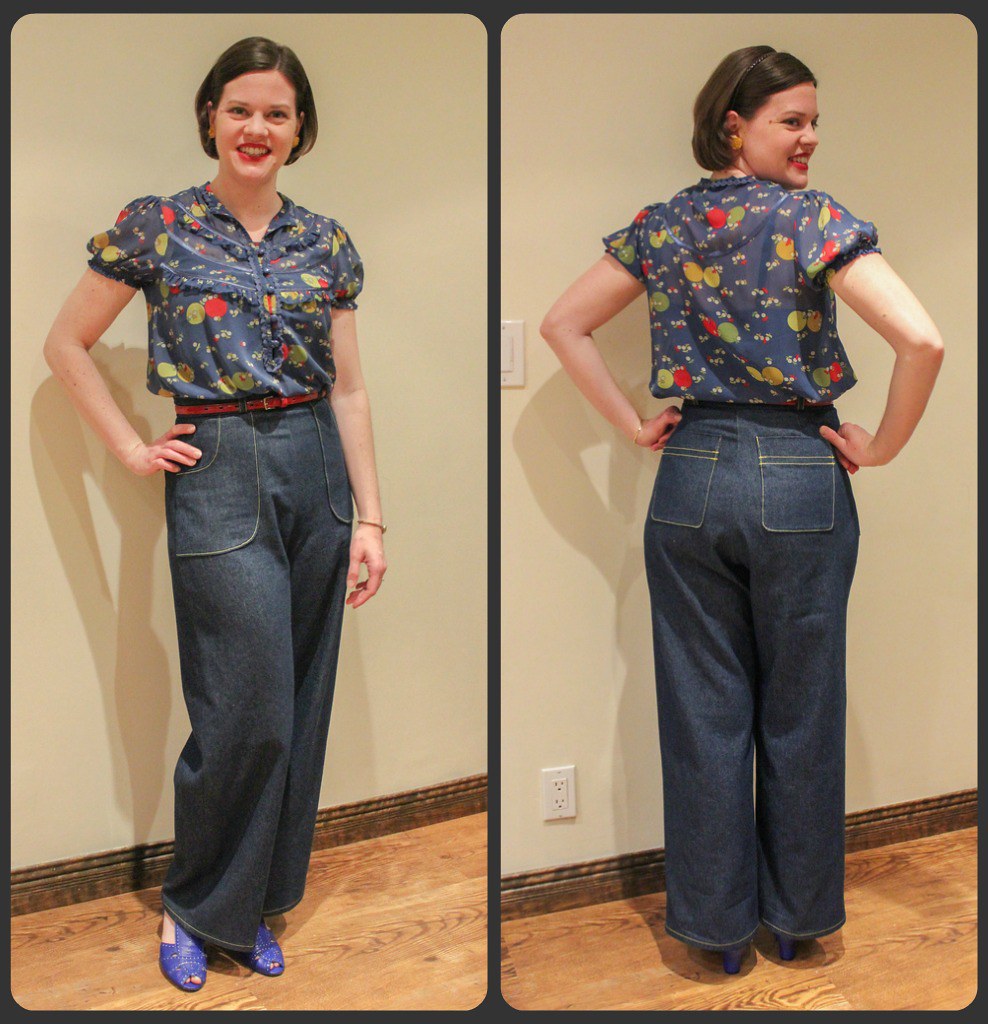
The Challenge: #5 Peasants and Pioneers - As wonderful as making pretty, pretty princess dresses is, the vast majority of people have always been poor commoners, whether they were peasants working the land, servants in big houses, or (later), pioneers carving their own space in new lands. This fortnight let’s make something that celebrates the common man.
Fabric: Lightweight Denim
Pattern: Wearing History's Smooth Sailing Trousers - modified to be flat-front, and added patch pockets front and back
Year: mid-1930's
Notions: Thread (blue and contrast yellow), metal zipper
How Historically Accurate is it: More "inspired" than accurate - a few women wore trousers in the 30's, but jeans like this were really still menswear. The fit is altered to have a higher crotch (not period correct, but much better for movement.) And I used a metal zip instead of my standard invisible, but a button placket would be even better.
Hours to Complete: Maybe 3 for patterning, 10 for sewing & fitting, and 4 for redoing the back pockets several times. So at least 17, and that's a conservative estimate.
First Worn: Dancing at Atomic Ballroom last Friday
Total Cost: ~$20 for fabric, $5 for thread and zipper
Showing posts with label 1930's. Show all posts
Tuesday, April 2, 2013
Wednesday, January 30, 2013
A "1938" Coat - HSF #2 (UFO)
Here's my first entry for the Historical Sew Fortnightly! It's a couple days late and there's no fancy photoshoot because I've got a cold right now. Looking at the challenges, I think I'm going participate in about half of them and turn it into an Historical Sew Monthly - that pace will work better for me and the projects I want to complete.
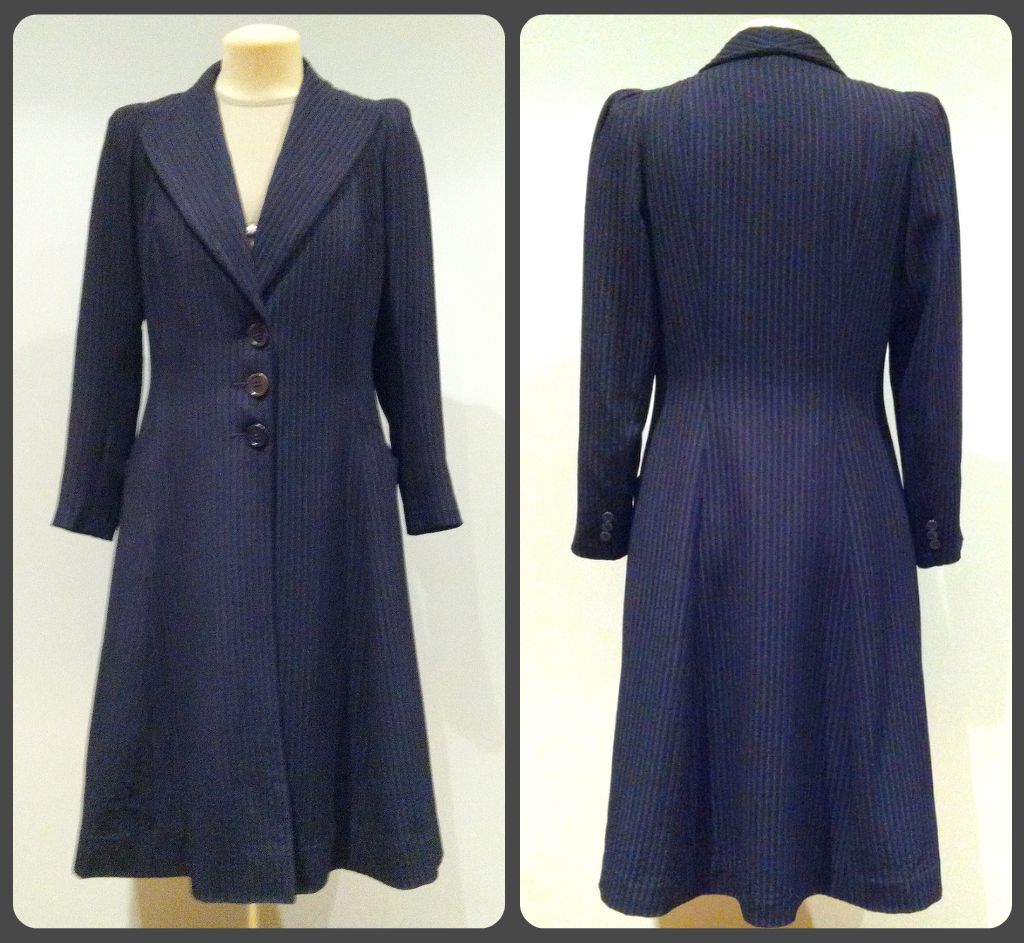
Nearly 2 years ago I bought a vintage coat with a ripped and shattering lining. I HATE repairs and alterations, so it's a sign of how much I love this coat that I was willing to work on it - except that I stopped right before it was done! The project stalled out in Fall 2011, with basically only the buttons and hems to go.
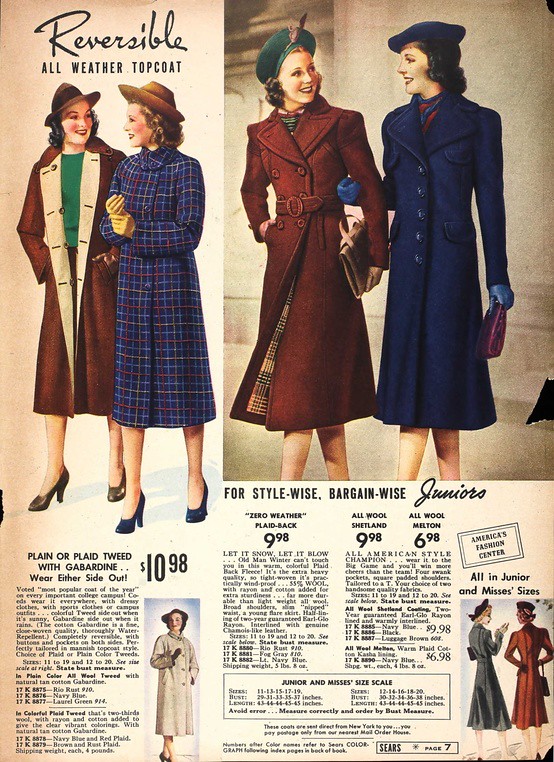
Originally I estimated this coat to be from 1939/40 and I was going to fudge it into this challenge (supposed to be 1938 or earlier), but then I came across this page of overcoats from the Sears 1938 catalog - the navy one has the same details as mine (wide lapels, princess seams, sleeve cap darts), so I definitely think my coat could be from 1938!
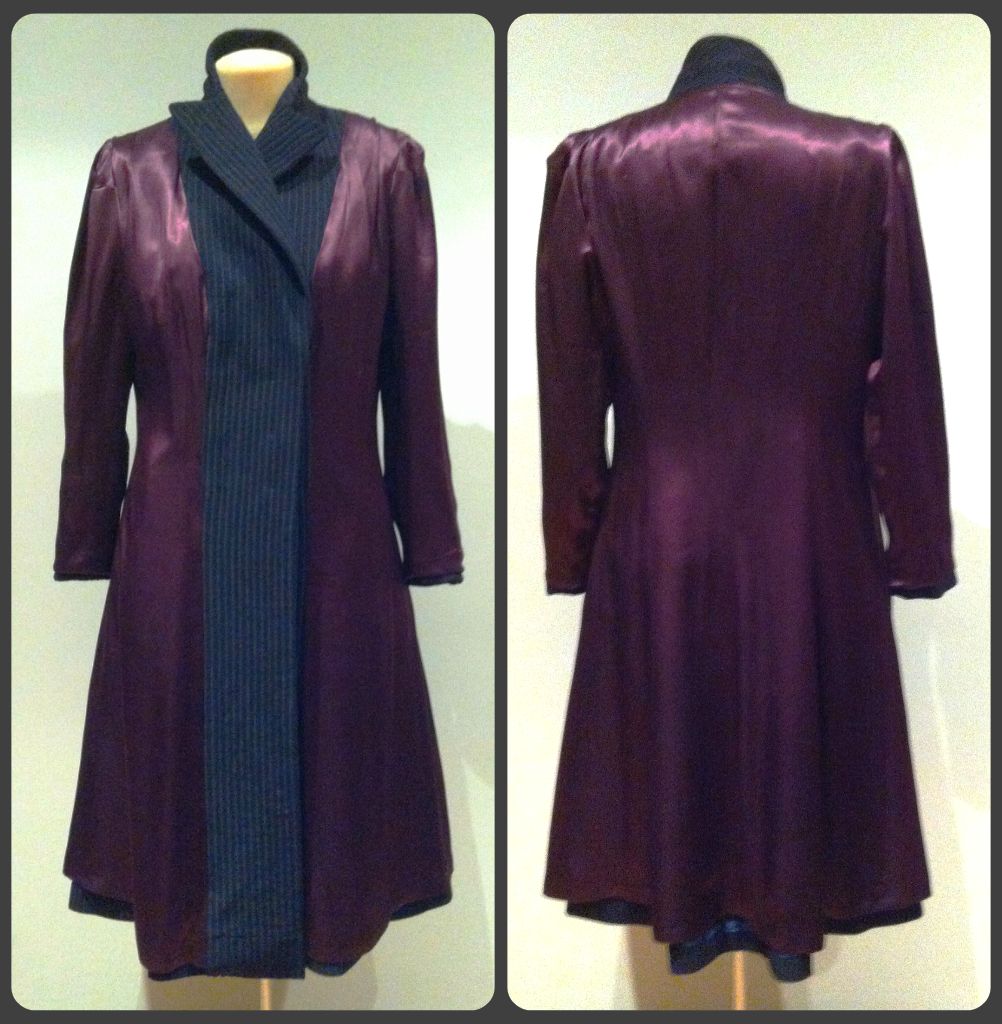
The old lining was shredding, so I carefully removed it and traced it off to make a new pattern. I referenced Easy Guide to Sewing Linings for this bit, and even though the process is fairly self-explanatory, the book had some good tips that made the project easier. I also handmade new shoulder pads and had it cleaned and pressed before inserting the new lining.
The Challenge: #2 UFO (UnFinished Object)
Fabric: Burgundy Rayon Satin for the replacement lining
Pattern: Traced off the original coat lining
Year: 1938-ish ;)
Notions: Handmade shoulder pads, replacement buttons, hem tape, thread
How Historically Accurate: Nearly 100%! It helps that I could use a machine and had the original to copy. The only thing that would have been more accurate would be rayon hem tape instead of polyester.
Hours to Complete: Maybe 60 total, about 8 hours for this challenge. I'm super slow!
First Planned Wearing: Saturday February 26, 2013 to the Great LA Air Raid
Total Cost: About $30, not including the purchase of the coat
Nearly 2 years ago I bought a vintage coat with a ripped and shattering lining. I HATE repairs and alterations, so it's a sign of how much I love this coat that I was willing to work on it - except that I stopped right before it was done! The project stalled out in Fall 2011, with basically only the buttons and hems to go.
Originally I estimated this coat to be from 1939/40 and I was going to fudge it into this challenge (supposed to be 1938 or earlier), but then I came across this page of overcoats from the Sears 1938 catalog - the navy one has the same details as mine (wide lapels, princess seams, sleeve cap darts), so I definitely think my coat could be from 1938!
Outside View - the part I didn't make. :)
Inside View - the part I made!
Fabric: Burgundy Rayon Satin for the replacement lining
Pattern: Traced off the original coat lining
Year: 1938-ish ;)
Notions: Handmade shoulder pads, replacement buttons, hem tape, thread
How Historically Accurate: Nearly 100%! It helps that I could use a machine and had the original to copy. The only thing that would have been more accurate would be rayon hem tape instead of polyester.
Hours to Complete: Maybe 60 total, about 8 hours for this challenge. I'm super slow!
First Planned Wearing: Saturday February 26, 2013 to the Great LA Air Raid
Total Cost: About $30, not including the purchase of the coat
Labels:
1930's,
Historical Sew Fortnightly,
Make and Mend,
Sewing
Sunday, October 7, 2012
Fine & Dandy Outfit Challenge
A couple weeks ago Bobby White of Fine & Dandy and Swungover challenged his readers to present a Fall-to-Summer transitional outfit. I try to confine my outfit posts to things I've made or special events, so I took this as a challenge to do a dress revamp that's been waiting a couple years.
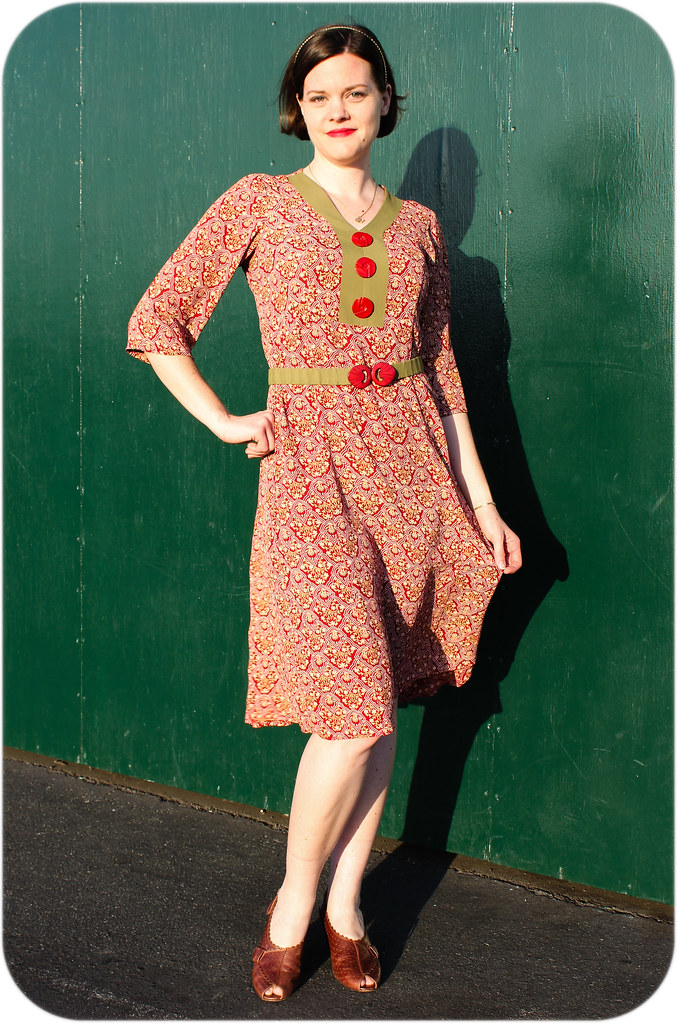
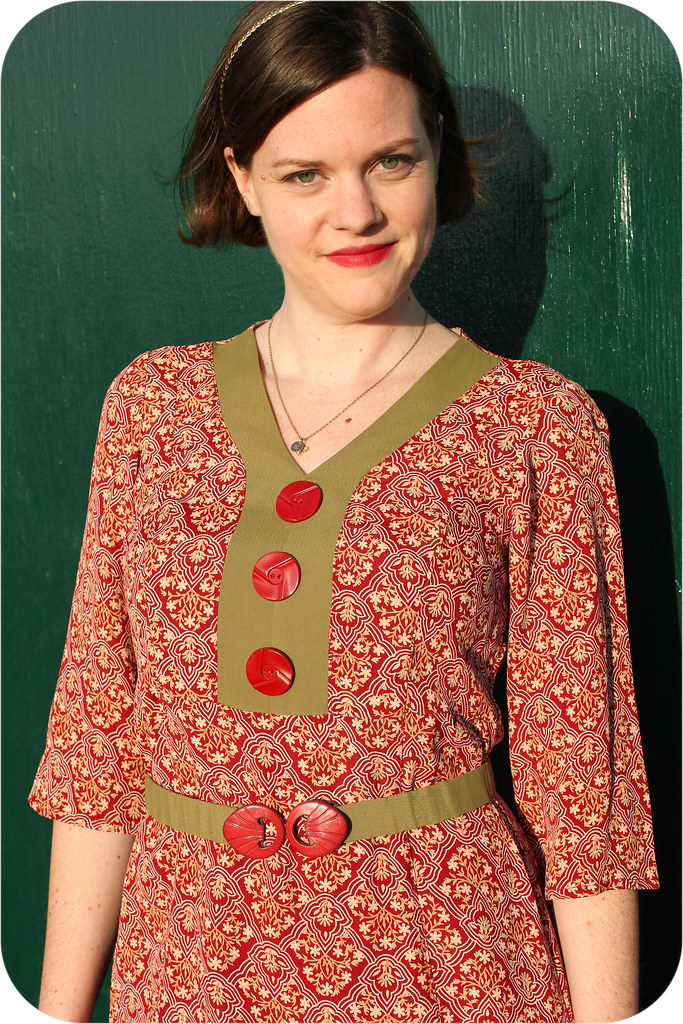
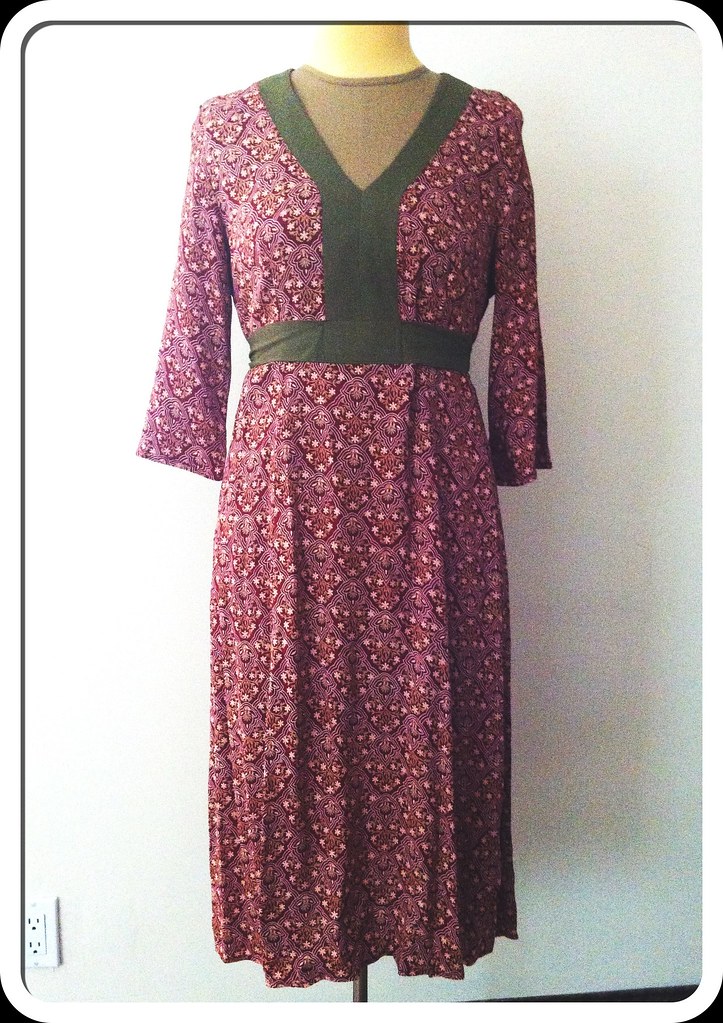
I've got a few Loco Lindo dresses that I've picked up at sample sales - I love the vintage-y rayon crepe print fabrics so I'm a sucker for grabbing ones that are too big for me with the intention of fixing them. This dress always vibed early 1930's to me, so I finally got to work at making it wearable. I wore the finished dress out dancing Friday night, and it was so much fun! The skirt length is technically too short for early 30's, but I'm more comfortable with knee-length anyway.
The original dress was too big in the width and length for me - I raised the shoulders about 2 inches (giving me nice high armholes that are so great for movement and dancing) and turned the front darts into princess seams to remove about 4 inches from the circumference (bodice and skirt). The green neck contrast originally wrapped around as a back neck yoke, but I lost that when I raised the shoulders, so I just added bias tape to finish the back neck.
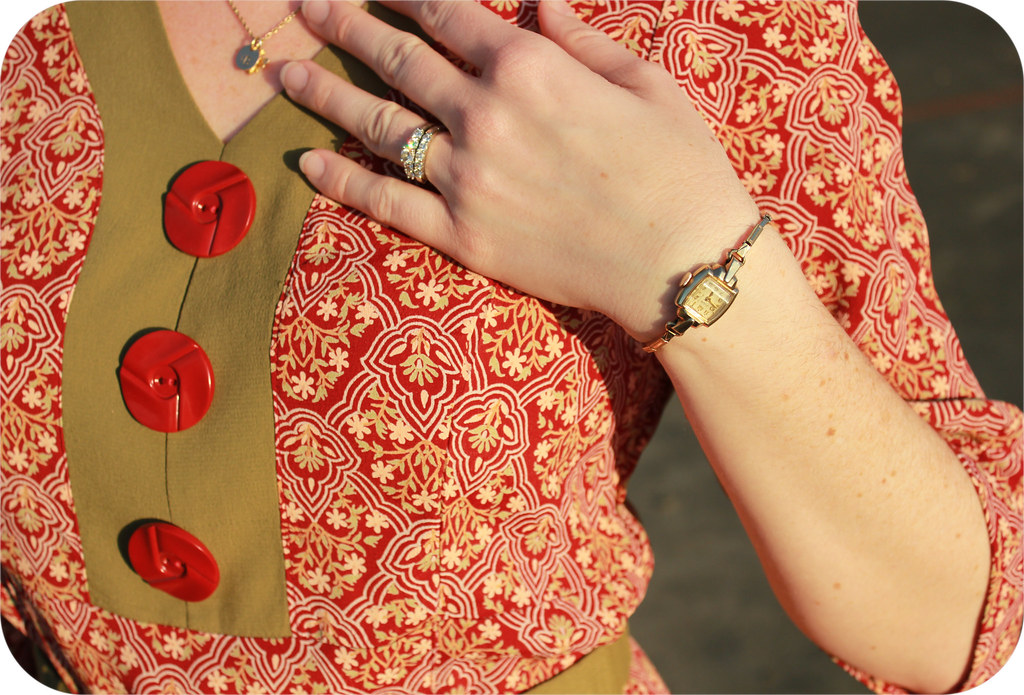
I also removed the self tie and made it into a belt, and added some matching buttons to add to the 30's look. After I figured out how to reduce the bodice size, it was an easy revamp - but I almost didn't make the submission deadline due to being super sick the last couple weeks, so I gave up some housecleaning to finish the project. I should do that more often! ;)
I've got a few Loco Lindo dresses that I've picked up at sample sales - I love the vintage-y rayon crepe print fabrics so I'm a sucker for grabbing ones that are too big for me with the intention of fixing them. This dress always vibed early 1930's to me, so I finally got to work at making it wearable. I wore the finished dress out dancing Friday night, and it was so much fun! The skirt length is technically too short for early 30's, but I'm more comfortable with knee-length anyway.
My new-to-me 30's watch, picked up at an antique mall last weekend.
It keeps good time when I remember to wind it!
I also removed the self tie and made it into a belt, and added some matching buttons to add to the 30's look. After I figured out how to reduce the bodice size, it was an easy revamp - but I almost didn't make the submission deadline due to being super sick the last couple weeks, so I gave up some housecleaning to finish the project. I should do that more often! ;)
Thursday, February 23, 2012
"I'm Just A Jitterbug"
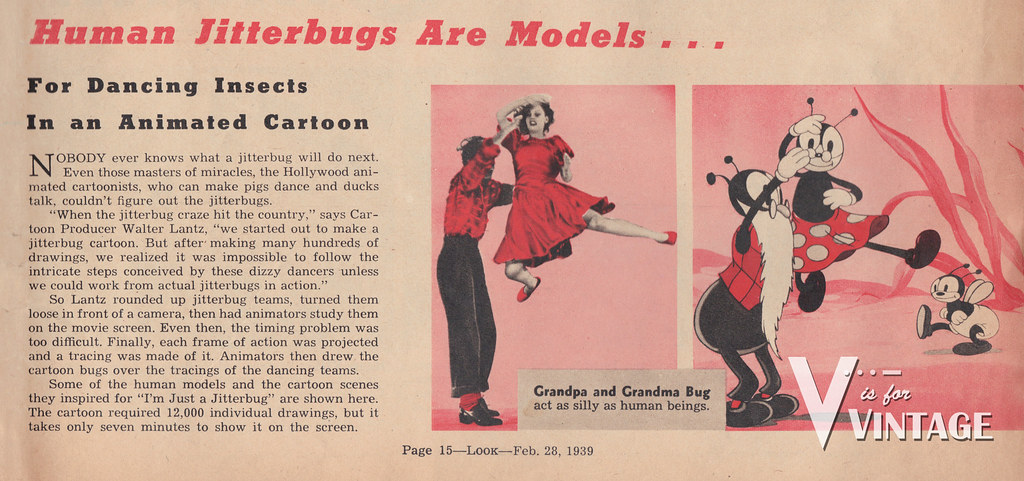
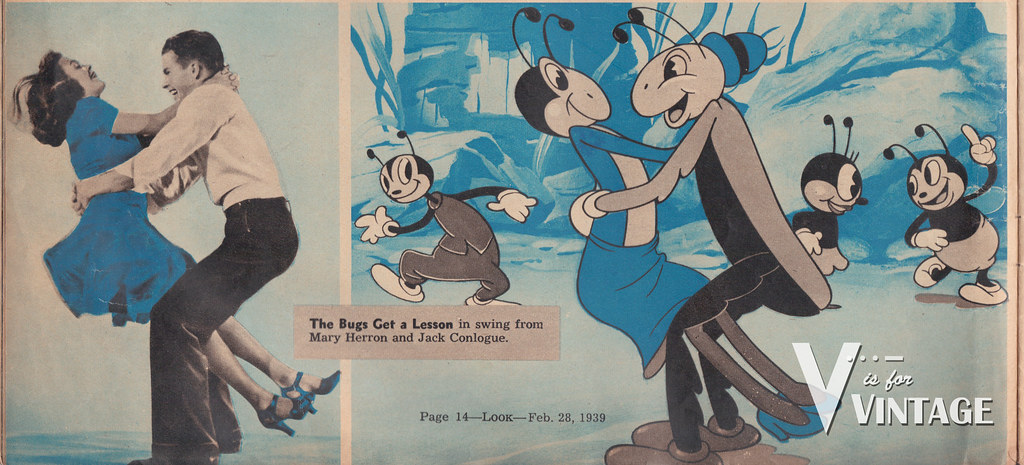
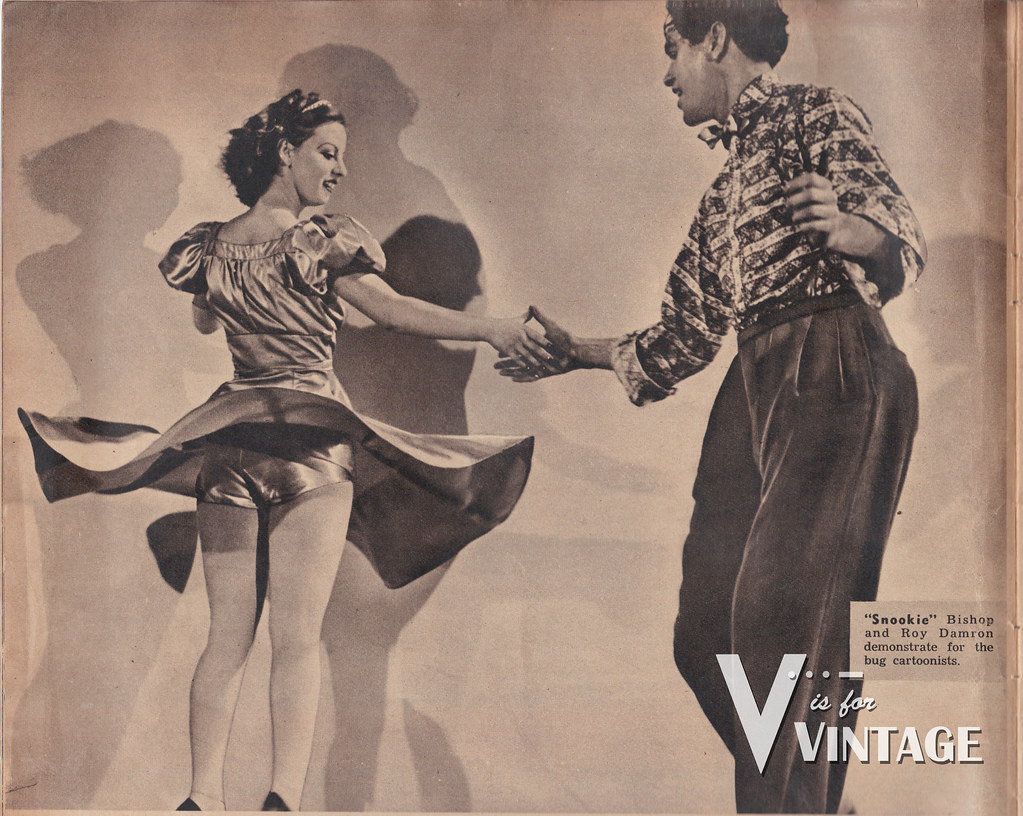
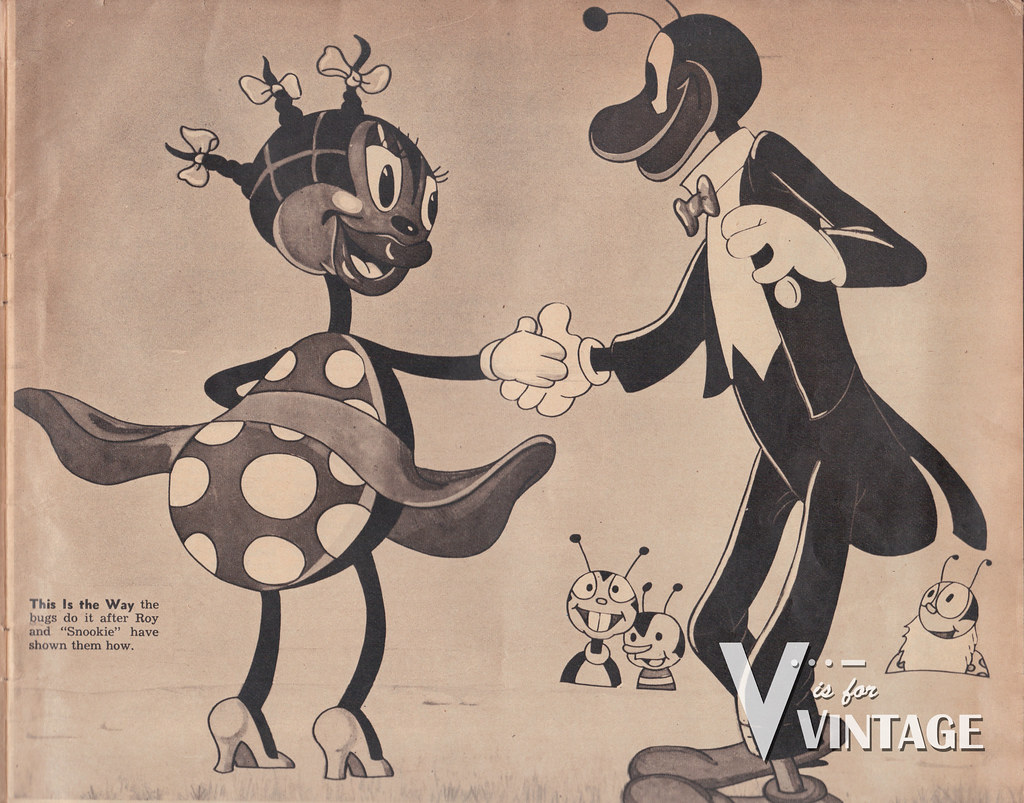
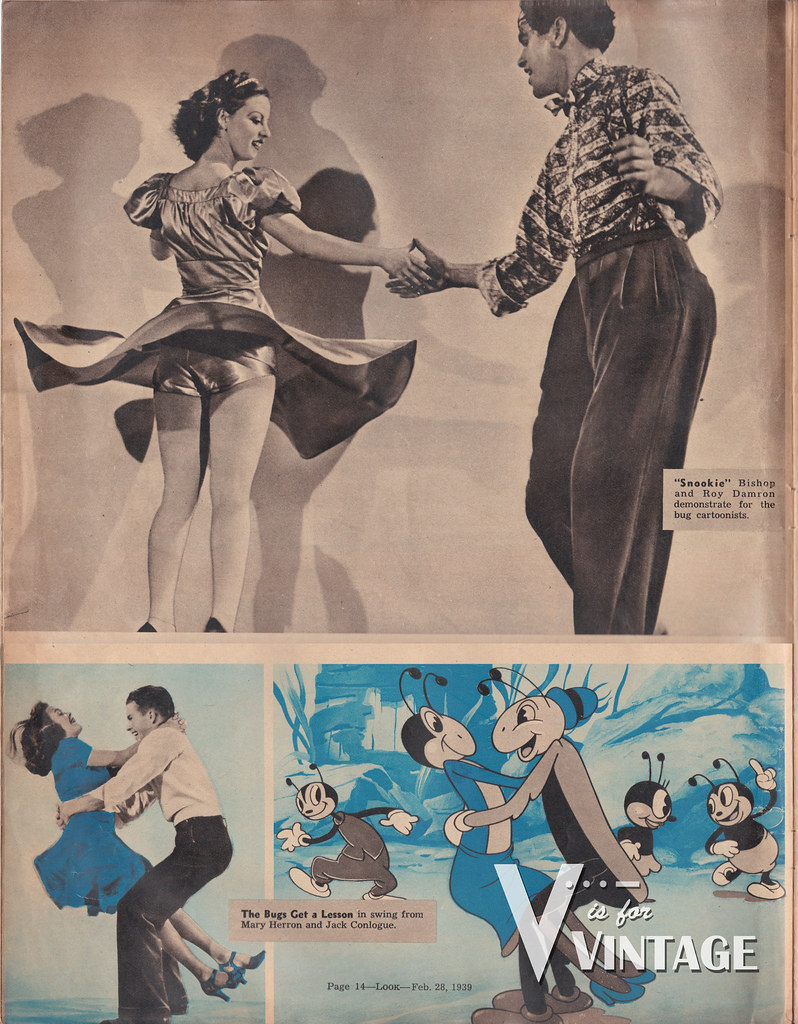
I've fallen off posting about dancing much in the last couple months, but a recent Facebook conversation reminded me that I've been meaning to post this article originally published in a 1939 Look Magazine. It shows some "behind the scenes" shots of LA swing dancers who were filmed as inspiration for the Walter Lantz cartoon short "I'm Just a Jitterbug".
The footage of dancing was rotoscoped for the cartoon (basically traced), which seems to be looked down on by animators, but it's fun for us dancers, because it's so true to life. Only 2 couples are shown in the Look article, but from watching the footage we know that Ray Hirsch and Patti Lacey were part of this project too, because we see their signature moves in it!
As was unfortunately common in this era, there are racist and derogatory images included in the article and cartoon. I have included them in this entry because I feel strongly that it is inappropriate to cut them and not recognize the bigotry present.
----------------------------------------------------------------------------------
Human Jitterbugs Are Models...
For Dancing Insects In an Animated Cartoon
Nobody ever knows what a jitterbug will do next. Even those masters of miracles, the Hollywood animated cartoonists, who cam make pigs dance and ducks talk, couldn't figure out the jitterbugs.
"When the jitterbug craze hit the country," says Cartoon Producer Walter Lantz, "we started out to make a jitterbug cartoon. But after making many hundreds of drawings, we realized it was impossible to follow the intricate steps conceived by these dizzy dancers unless we could work from actual jitterbugs in action."
So Lantz rounded up jitterbug teams, turned them loose in front of a camera, then had animators study them on the movie screen. Even then, the timing problem was too difficult. Finally, each frame of action was projected and a tracing was made of it. Animators then drew the cartoon bugs over the tracings of the dancing teams.
Some of the human models and the cartoon scenes they inspired for "I'm Just a Jitterbug" are shown here. The cartoon required 12,000 individual drawings, but it takes only seven minutes to show it on the screen.
Grandpa and Grandma Bug act as silly as human beings.
(Dancers are Roy Damron and Snookie Bishop)
The Bugs Get a Lesson in swing from Mary Herron and Jack Conlogue.
"Snookie" Bishop and Roy Damron demonstrate for the bug cartoonists.
This is the Way the bugs do it after Roy and "Snookie" have shown them how.
----------------------------------------------------------------------------------
And here's the final version of the cartoon!
Funny thing is, I don't see any of the images from the magazine in the cartoon.


"I'm Just a Jitterbug" (1939)
Because I like to see the unedited version myself, I've included the complete magazine pages below.
Labels:
1930's,
Balboa,
LA Style,
Lindy Hop,
Look Magazine,
Roy Damron,
Swing Dance
Friday, January 6, 2012
1939 Eagle Rock High School Yearbook
Happy New Year! I hope it's not too late to say that :) I've had some writer's block lately and haven't felt like saying much, but then yesterday I received an eBay package that I'm excited to share! I bought a 1939 yearbook from my high school in Eagle Rock, CA (northeast part of Los Angeles). When I was in high school I loved looking through the old yearbooks, and I'm thrilled to have one of my own.
Eagle Rock High School was opened in 1927 and was built in a traditional Spanish style, with tile roofs, arched doorways, and a courtyard. The original buildings were torn down in 1970 and rebuilt (due to earthquake safety standards, I believe), and unfortunately the "new" buildings weren't nearly as cute. The only original building still remaining is the auditorium.
In this period, the school had 2 graduating classes per year - Winter and Summer. I think they combined the classes in the 40's? My yearbook has all the Winter classes/clubs/sports at the front, and Summer in the back.

The yearbook is dedicated to the burgeoning city of Los Angeles. It's fun to look at the pictures of our historical LA landmarks (Hollywood, Los Angeles City Hall, and Griffith Observatory) and think how they were so new back then. I guess they're still new by most architectural standards, but they feel old to us Angelenos!
Some snapshots of the old school - you can see the courtyard and classrooms, and I think tennis courts?
Winter Class 4-H Club. I think those are classrooms in the background?
This is one of my favorites - this club is standing in front of the auditorium, and you can see the class plaques out front. Every graduating class votes for a Class Name, designs a logo, and raises funds to have a plaque made for the front. It's nearly full out in front now! Next time I'm driving by the school I should take a picture - it's quite cool to see how the graphics changed over time.
Of course, there are loads of hair and clothing inspiration in this book, so I will be posting more. (did someone say Stripey Socks? They're all over!) After I finished scanning I found the book's original owner - Shirley Martin. She's quite cute and judging from the inscriptions she was quite popular with the boys!
Tuesday, September 27, 2011
Arthur Murray: How to Become a Good Dancer
Here are some scans from Arthur Murray's book "How to Become a Good Dancer". Originally published in 1938, Arthur Murray's book illustrates the popular ballroom dance steps using the footprint diagrams he developed for his mail order dance instruction booklets in the 20's.
My edition is from 1942, and the 200+ page book covers general dance technique, Fox Trot, Waltz, Tango, Rumba, La Conga, Samba, and finally, on four piddly little pages at the end, has the Jitterbug and Lindy Hop.
Interestingly, the steps as illustrated are not what you'd learn today in a jitterbug/swing dance class. There are some similarities, but the names of the dances/moves and even where to place beat 1 are different! This is a good reminder that we often view the past through our own experiences, or oversimplify it by thinking that one person's experiences represents everyone. But this way of thinking about "how things used to be" isn't usually accurate. If you danced at the Savoy Ballroom you would have one idea of Lindy Hop, but if you took a class from Arthur Murray you'd have a completely different understanding of the dance - both things you could have done in New York in 1938. Is one right and the other one wrong?
My edition is from 1942, and the 200+ page book covers general dance technique, Fox Trot, Waltz, Tango, Rumba, La Conga, Samba, and finally, on four piddly little pages at the end, has the Jitterbug and Lindy Hop.
Interestingly, the steps as illustrated are not what you'd learn today in a jitterbug/swing dance class. There are some similarities, but the names of the dances/moves and even where to place beat 1 are different! This is a good reminder that we often view the past through our own experiences, or oversimplify it by thinking that one person's experiences represents everyone. But this way of thinking about "how things used to be" isn't usually accurate. If you danced at the Savoy Ballroom you would have one idea of Lindy Hop, but if you took a class from Arthur Murray you'd have a completely different understanding of the dance - both things you could have done in New York in 1938. Is one right and the other one wrong?
All swing dances used to be called the Jitterbug -
today we distinguish and separate the various forms much more.
Here, Shag is called a variation on the Jitterbug.
The photograph referenced in the above instructions.
This version of the Lindy Hop starts on the triple step (our modern beat 3) and
removes the rotation of the partners.
This version replaces the triple steps with a tap-step, but it's still an 8-count basic.
"Sugars" are what we call swivels today.
Tuesday, July 26, 2011
CH 2011 - "A Day at the Races" Outfit
I only made one new outfit for Camp Hollywood this year, for Friday night. The theme was A Day at the Races but it was also the night of the Balboa contest finals, so I didn't want to be too "theme-y". I decided to wear some 30's daywear but was still undecided as to exactly WHAT - until Kate posted some Summer Inspiration from 1938. The Sunback Dress (4th picture down, #7754) caught my eye and I knew that was the way to go.
And here's an action shot - the belt kept spinning around all night - I think I need a well-placed snap.
Doesn't rayon just move the best though? :)
I have a similar sundress pattern that I've made several times, so I grabbed that and headed to Jo-Ann's - and actually found some cream rayon herringbone there! Miracles do happen. The striped fabric was hiding in the upholstery section, but it softened up after washing.
![]() |
| Sundress Hollywood Pattern #1788 - c. 1939 |
And here's an action shot - the belt kept spinning around all night - I think I need a well-placed snap.
Doesn't rayon just move the best though? :)
Photo by Alex Vasallo
And last but not least, here's a video of the Balboa contest finals. Can't leave that out, I guess!
Camp Hollywood 2011 - Balboa Finals
Video by Sandra Carranza
Wednesday, July 20, 2011
LOOK Ma - More Dancing!
Here's the final installment from the Swing Issue of LOOK Magazine - September 27, 1938.
I wonder what happened with the photo contest - heck, I'd enter for $50 in today's money!
[In the previous post] are the four basic movements in the LOOK Hop, a new swing dance created by vivacious Rita Rio, whose popular all-girl swing band has made a hit in movies, on the radio and in ballrooms.
Rita says much of the fun in dancing the LOOK Hop lies in working out additional steps after mastering the "L," double O" and the "K". [Below] she and her partner, Bill Furrow, demonstrate other steps.
LOOK will pay $50 to the amateur submitting the best set of pictures showing a couple doing the LOOK Hop.
"Gettin' in the mood," Rita calls this. So far, so good; it's easy.
"The cuddle and coo" is an easy one, too, but from here on the steps get more complicated.
Allee-oop, and hang on tight; if the boy friend is husky, this is all right.
This looks as if it takes practice, but it also looks like lot of fun.
The secret of success in this "step" is for the girl to hold on.
In the spirit of the dance, now both partners take a look. You may go on from here.
Monday, July 18, 2011
How to Do the LOOK Hop
Rita Rio is back! This time she teaches you to dance the LOOK Hop.
I dare you to try this at the next dance you go to!
Band Leader Rita Rio Introduces the LOOK Hop - Try It
From Look Magazine, September 27, 1938
They Face, one arm overhead, one arm out, forming "L". For 8 counts continue basic step: Jump with toes in, knees together, slightly bent; jump on toes, feet apart, knees straight.
Continuing basic step, girl turns back to partner as feet are apart, and both form an "O" with arms, the man's to the right, the girl's to the left.
As Toes are turned in on basic step, man drops arm in circle over partner's head. Girl's arms form "O" in front. Continue, reversing arms from side to side 8 times.
Girl Continues with back to boy, both standing on right foot, left leg extended to side, knee straight, right arm over head, left arm extended diagonally from shoulder to form "K". Hop on right foot in circle for 8 counts.
Friday, July 15, 2011
Picture Definitions of Swing Terms Pt. 3
From Look Magazine, September 27, 1938
Irene Daye makes a lovely canary (girl vocalist) for Gene Krupa. Even tin ears (persons who dislike swing) like Irene, and of course rug cutters (swing dancers) do.
Speaking of swing, here's Jack Benny as a squeaker (violinist), Dick Powell at the plumbing (trumpet), Bing Crosby drumming, Tommy Dorsey, chief ridesman (ace musician) behind Bing, and Shirley Ross at the 88 (piano). Peeking over Bing's hat is Ken Murray. These spooks (white musicians) put out real gut-bucket (lowdown music) without groanbox (accordian) or grunt horn (tuba).
Hot Man (a musician who can swing it) Bunny Berigan can send (arouse the alligators) on an iron horn (trumpet), even if he closes his eyes when he hits a lick (a hot phrase in rhythm).
When you think of Eddie Duchin, you think of a moth box (piano), but Eddie here shows he's at home on a woodpile (xylophone) too. He's also an ace monkey hurdler (organist).
When you place a cat (swing musician) beside a doghouse (bass fiddle), anything might happen, even barrel-house (where every man swings for himself). However, Jimmy Dorsey's ace drummer, Ray McKinley, sticks to his voodoo boilers (drums).
Irene Daye makes a lovely canary (girl vocalist) for Gene Krupa. Even tin ears (persons who dislike swing) like Irene, and of course rug cutters (swing dancers) do.
Speaking of swing, here's Jack Benny as a squeaker (violinist), Dick Powell at the plumbing (trumpet), Bing Crosby drumming, Tommy Dorsey, chief ridesman (ace musician) behind Bing, and Shirley Ross at the 88 (piano). Peeking over Bing's hat is Ken Murray. These spooks (white musicians) put out real gut-bucket (lowdown music) without groanbox (accordian) or grunt horn (tuba).
Hot Man (a musician who can swing it) Bunny Berigan can send (arouse the alligators) on an iron horn (trumpet), even if he closes his eyes when he hits a lick (a hot phrase in rhythm).
When you think of Eddie Duchin, you think of a moth box (piano), but Eddie here shows he's at home on a woodpile (xylophone) too. He's also an ace monkey hurdler (organist).
When you place a cat (swing musician) beside a doghouse (bass fiddle), anything might happen, even barrel-house (where every man swings for himself). However, Jimmy Dorsey's ace drummer, Ray McKinley, sticks to his voodoo boilers (drums).
Subscribe to:
Posts (Atom)